


 Home
Home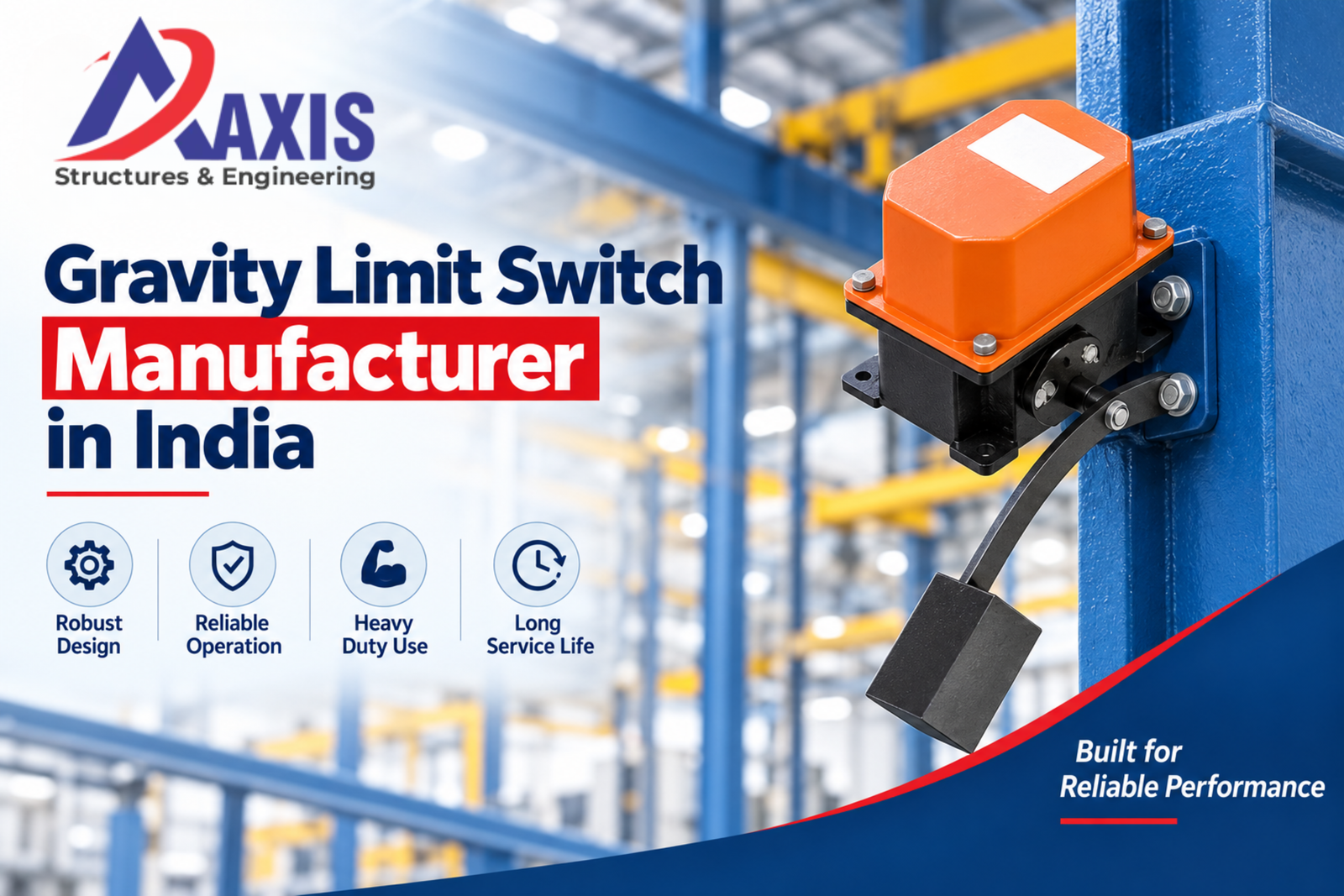
A hoist that lifts a load correctly still needs a dependable way to stop before the hook block reaches the upper mechanical limit. A few centimetres of missed stopping distance can matter. That is the job of an appropriately installed gravity limit switch in many crane hoist arrangements.
When searching for a Gravity Limit Switch Manufacturer in India, do not select from an enclosure photograph alone. Axis Cranes encourages buyers to check the hoist layout, weight movement, control circuit and installation dimensions before discussing a replacement.
What Is a Gravity Limit Switch in an EOT Crane?
A gravity limit switch monitors the upper travel of a hoist using a suspended weight, linkage and switch contacts. It is generally fitted where the hoist's moving block can act on the weight assembly at a predetermined position. The control system then uses the contact change to inhibit further lifting.
It is not a load-capacity sensor, and it does not measure the weight of a lifted load. Its purpose is position-related protection. The final stopping distance also depends on the hoist brake, speed, wiring and control design.
Why the upper hoist limit matters
- Helps prevent the hook block from travelling into the drum, trolley structure or other upper obstruction.
- Provides a defined electrical response near the upper end of hoisting travel.
- Supports a protective hoist control arrangement when integrated correctly.
- Allows inspection of the mechanical actuator, counterweight and switch contacts.
- Requires proper adjustment and functional testing; fitting the switch is not enough.
How a Gravity Limit Switch Works: Main Components
Designs vary, so confirm the actual manufacturer's mechanism and wiring. A common counterweight type uses the parts below.
1. Suspended weight and operating rope or chain
The weight hangs in the hoist's designated travel path. When the hook block reaches the set upper region, its movement alters the weight's support or tension. The weight must move freely without snagging on the lifting rope or nearby structure.
2. Lever, shaft and actuating mechanism
Movement of the counterweight arrangement rotates or shifts a lever. The lever operates internal contacts, often through a cam or linked mechanism. Some gravity-operated designs rely on weight balance rather than a spring return; never assume all models reset identically.
3. Electrical contacts and terminals
The contacts signal the hoist control circuit to prevent further upward travel. Normally open, normally closed and multi-contact arrangements exist depending on the model. Contact ratings and wiring logic must match the crane's approved circuit diagram.
4. Enclosure and mounting bracket
The housing protects the mechanism and terminals. Mounting position, cable entries, moisture exposure, lever clearance and enclosure protection are all relevant. A switch mounted at the wrong angle can function poorly even if its contacts are correct.
— Suggested wording for the Axis Cranes technical team; confirm attribution before publication.
Where Are Gravity Limit Switches Used?
These switches are used in suitable vertical hoisting applications, rather than as general-purpose runway travel sensors.
- EOT crane main hoists: upper hook-travel limiting in compatible arrangements.
- Auxiliary crane hoists: independent upper-limit actuation for the auxiliary lifting mechanism.
- Electric wire rope hoists: physical upper-limit sensing with a suitable suspended-weight design.
- Gantry and Goliath cranes: hoist-motion protection where the mechanism permits this arrangement.
- Industrial lifting equipment: selected vertical lifting systems with an engineered mounting and control interface.
How to Select the Right Gravity Limit Switch
Start with the existing hoist arrangement. The most useful inputs are often the old switch marking, installation photos and a drawing of the hook's upper stopping position.
Check the hoist travel and stopping position
Measure the available clearance near the upper limit and establish where the weight must be actuated. Account for hoist speed and stopping travel according to the equipment maker's instructions. The switch cannot correct a poorly adjusted or defective brake.
Confirm contact type and control-circuit duty
Match the number of contacts, NO/NC configuration, rated voltage, permissible current and control-circuit interface. Some configurations are used to control a contactor or safety circuit rather than to switch motor current directly.
Review mounting, lever direction and reset
Check mounting-hole positions, lever orientation, weight linkage, required operating angle and reset behaviour. A replacement must behave correctly in both lifting and the permitted lowering/recovery sequence.
Account for the working environment
Dust, heat, vibration, water and corrosion influence enclosure and material selection. Ask for the model-specific ingress protection (IP) rating; do not assume an IP rating from the product category.
Gravity Limit Switch Specifications to Verify
There is no single safe universal electrical or dimensional specification for every hoist. Request a datasheet or drawing for the exact model and review:
- Switch manufacturer, model and intended hoist application.
- Operating method: counterweight, lever and required actuation direction.
- Contact count, NO/NC arrangement and contact action.
- Rated operating voltage, current and utilisation category for the control circuit.
- Housing material, ingress protection (IP) rating and ambient temperature range.
- Weight, rope or chain arrangement and required operating travel.
- Mounting dimensions, switch position and cable-entry details.
- Reset behaviour and compatibility with the crane wiring diagram.
- Inspection, adjustment and functional-test instructions.
- Any application-specific compliance requirements identified by the crane designer.
Practical note: A 5-tonne or 10-tonne crane rating does not identify the correct gravity limit switch. The hoist's geometry and control circuit still have to be checked.
Buyer Tips and Common Gravity Limit Switch Mistakes
Buyer tip: photograph the entire mechanism
Send one close-up of the switch nameplate and one wider photo showing the suspended weight, hook block and mounting point. The wide photo often explains more than five product close-ups.
Buyer tip: ask for a wiring and mounting drawing
Confirm the terminal diagram and lever action before ordering. Two switches that look almost identical can change contacts in different sequences.
Common mistake: setting the upper limit too close
If the operating point ignores hoist speed and braking distance, the hook may continue upward after the switch changes state. Adjustment should follow the hoist manufacturer's procedure.
Common mistake: letting the weight snag
A twisted rope, obstructed weight or incorrectly routed linkage may prevent the switch from operating when needed. Check that the weight moves through the intended full range.
Common mistake: bypassing the switch after a trip
Never bridge the contacts simply to keep production moving. Isolate and lock out the equipment as required, then have a competent technician diagnose and test the protective function.
Industries Using Hoists with Gravity Limit Switches
Where compatible EOT cranes and wire rope hoists are installed, gravity-operated upper limits may be relevant in:
- Steel fabrication and processing plants
- Foundries and heavy engineering workshops
- Automotive and machinery manufacturing
- Warehouse and industrial material-handling facilities
- Equipment assembly and maintenance bays
- Infrastructure fabrication and repair yards
Gravity Limit Switch Manufacturer in India — Axis Cranes
Axis Cranes is the point of contact for this gravity limit switch enquiry. A useful discussion begins with the equipment and the switch's real operating requirements—not with a claim that one standard component works on every hoist.
- Review of buyer-supplied hoist and switch information
- Discussion of upper-limit actuation and mounting compatibility
- Clarification of required contact configuration and control voltage
- Consideration of environmental conditions and enclosure requirements
- Specification-led enquiry and quotation discussion
If the original switch has failed, mention the symptom: no upward travel, failure to trip, a sticking lever or a damaged weight rope. That small detail helps frame the technical enquiry.
Frequently Asked Questions — Quick Buyer Answers
What is a gravity limit switch in an EOT crane?
A gravity limit switch is a mechanically actuated device used to stop upward hoist travel at a preset limit. A suspended weight and lever mechanism change electrical contacts when the hook block reaches the set position.
How does a counterweight gravity limit switch work?
During normal hoist travel, a suspended weight keeps the lever in its operating position. Near the upper limit, the rising hook block lifts or unloads the weight, allowing the lever to move and the switch contacts to change state.
Where is a gravity limit switch used?
Gravity limit switches are commonly used for upper hoist travel protection on EOT crane main and auxiliary hoists, electric wire rope hoists, gantry cranes and other compatible vertical lifting equipment.
Is a gravity limit switch the same as a rotary limit switch?
No. A gravity switch responds to physical movement of a suspended weight near the hook block. A rotary limit switch responds to shaft rotation or travel counting. Some hoists use both as separate protective functions.
What contact configuration should I select?
Check the crane control schematic and switch documentation for the required normally closed or normally open contact arrangement, number of contacts, electrical ratings and method of resetting. Do not copy another model wiring diagram.
Can a gravity limit switch stop a crane from overhoisting?
When correctly selected, installed and integrated into the control circuit, it can interrupt the upward hoist command at the designed upper limit. It is not a substitute for correct braking, commissioning or other required safeguards.
What should be inspected during gravity limit switch maintenance?
With the crane safely isolated, inspect the weight, rope or chain, lever freedom, mounting, enclosure, terminals and signs of damage. A competent person should verify the stopping function using the equipment procedure.
What details are needed for a gravity limit switch quotation?
Share the crane or hoist type, existing switch model, photos, control voltage, contact requirements, mounting dimensions, upper-limit arrangement, operating environment and quantity.
Need a Gravity Limit Switch for Your Hoist?
Send your hoist type, existing switch photos, contact configuration, control voltage and required quantity to Axis Cranes for a practical specification discussion.
Send an Enquiry WhatsApp Us


