


 Home
Home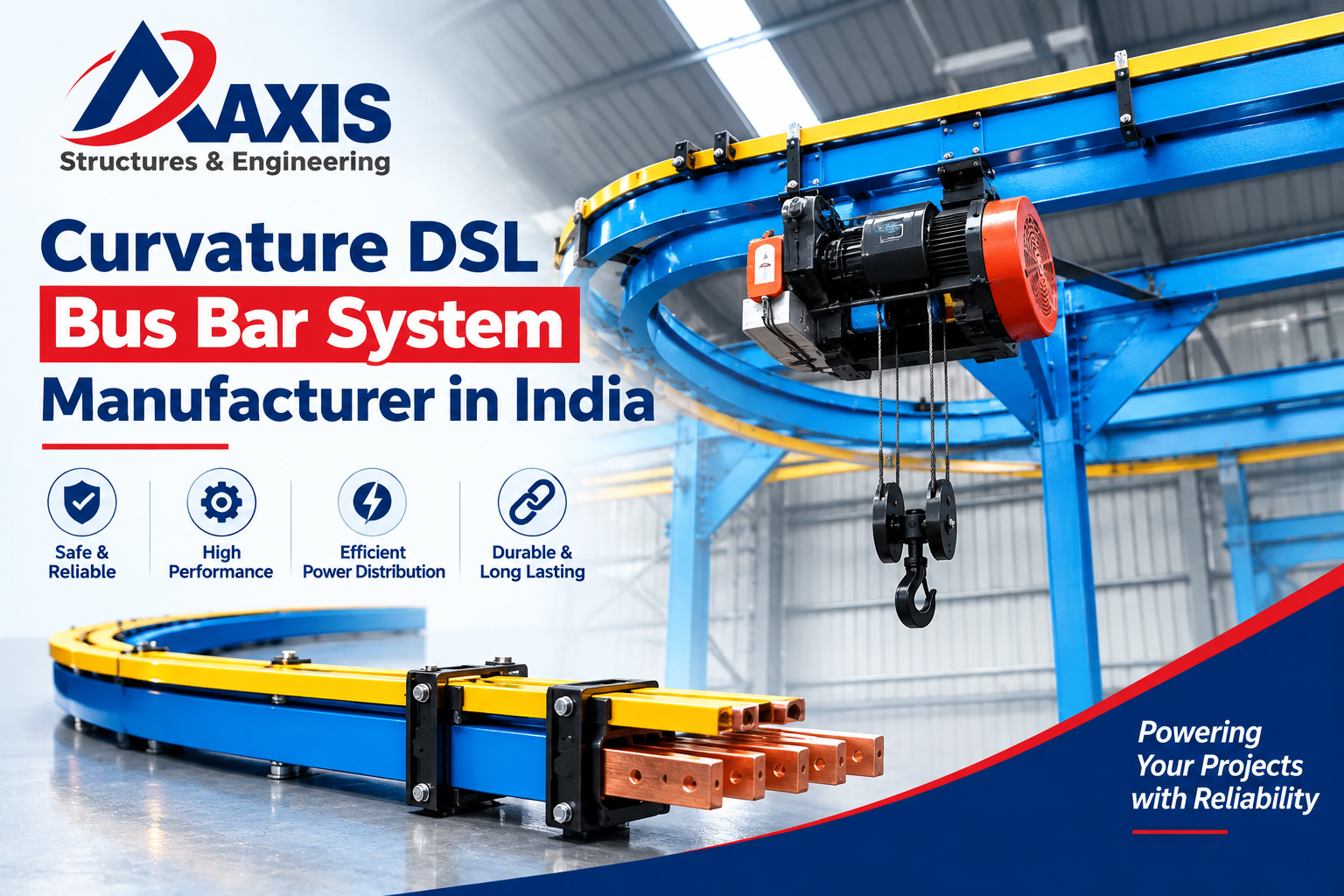
A reliable power collection system is essential when an overhead crane or other moving industrial equipment has to receive electrical power continuously along its travel path. In these installations, the bus bar arrangement, collector movement, conductor protection, and site geometry all need to work together rather than being treated as separate parts.
Axis Cranes provides Curvature DSL Bus Bar System solutions for industrial crane electrification and moving-equipment applications. The system selection is based on the actual installation, including travel layout, electrical requirements, straight or curved sections, environmental conditions, and collector arrangement. This approach is useful when a standard straight bus bar layout does not fully match the site geometry.
What Is a Curvature DSL Bus Bar System?
A DSL Bus Bar System is an enclosed conductor system used to transfer electrical power to moving equipment through a collector assembly. In crane applications, the conductor path is installed along the crane travel route and the collector moves with the equipment to maintain electrical contact.
The term Curvature DSL Bus Bar System is relevant when the installation geometry includes a curved or non-straight travel section. Instead of assuming that every crane runway has the same layout, the system has to be considered around the actual path, available space, collector movement, and electrical design.
Why the system matters in crane electrification
- Provides a defined electrical power-collection path for moving equipment.
- Keeps conductors enclosed rather than leaving exposed conductors in the travel area.
- Allows the collector arrangement to move with the crane or equipment.
- Can be planned for installations where the travel route includes suitable curved sections.
- Supports cleaner electrical integration compared with improvised trailing-cable arrangements in suitable applications.
Main Parts of a Curvature DSL Bus Bar System
The exact construction depends on the selected system and project requirements. However, a typical DSL bus bar installation is understood through a few important elements.
1. Enclosed conductor section
The conductor section carries the electrical supply along the required travel route. Insulation and enclosure arrangements are selected according to the system design and installation conditions.
2. Current collector
The collector maintains electrical contact with the conductor while moving with the crane or other powered equipment. Collector movement is especially important on installations where the bus bar route changes direction or includes a curve.
3. Support and mounting arrangement
The bus bar needs suitable mechanical support along the travel path. Mounting details should be checked against the available structure, clearances, alignment, expansion considerations, and site conditions.
4. Electrical connection and termination
Feed points, end connections, joints, and other electrical interfaces should be planned from the electrical drawing rather than decided only after installation starts. This avoids unnecessary changes at site.
— Axis Cranes Technical Team
Applications of Curvature DSL Bus Bar Systems
Curvature DSL Bus Bar Systems are considered where electrically powered equipment travels along a defined route and needs continuous power collection. Typical applications include:
- Overhead crane electrification for crane travel and industrial material handling.
- Gantry and workshop crane installations where a fixed electrical collection path is required.
- Industrial production areas with electrically powered moving equipment.
- Warehouses and logistics facilities where crane movement follows a planned travel route.
- Heavy engineering and fabrication plants where reliable power collection is part of the crane electrical system.
- Special layouts with suitable curved sections, subject to radius, collector movement, and system compatibility.
How to Select the Right DSL Bus Bar System
There is no useful “one size fits all” selection for crane electrification. The bus bar should be matched to the actual electrical and mechanical conditions of the installation.
Check the electrical requirement
Start with the equipment load and electrical supply information. The required conductor arrangement should be selected from the actual project data rather than copying a previous installation.
Check the travel geometry
Measure the travel length and identify straight, curved, transition, joint, and termination areas. For a curvature application, the available radius and collector movement need particular attention.
Check the environment
Dust, moisture, heat, corrosive atmosphere, outdoor exposure, and other site conditions can affect the appropriate system arrangement. Share these conditions before the final selection.
Check maintenance access
A bus bar may operate correctly when new but still become inconvenient if inspection points, collector access, joints, or replacement areas are difficult to reach. Maintenance access should be considered during layout planning.
Important Technical Details to Confirm Before Ordering
Product specifications should be confirmed against the project rather than assumed from a generic catalogue description. Before ordering a Curvature DSL Bus Bar System, ask the supplier to review:
- Electrical supply and required current capacity.
- Number and arrangement of conductors.
- Total travel length and number of sections.
- Curved section details, including the required path and radius where applicable.
- Collector type and required collector travel.
- Mounting/support arrangement and available clearances.
- Indoor or outdoor installation conditions.
- Ambient temperature, dust, moisture, or corrosive exposure where relevant.
- Feed points, joints, end terminations, and electrical connection details.
- Available crane GA, electrical schematic, and installation drawings.
These details are more useful for a correct quotation than simply specifying “DSL bus bar” without the site information.
Buyer Tips and Common Installation Mistakes
Buyer tip: share the layout before asking for a final quotation
A basic crane travel drawing or GA can reveal information that a product name cannot. Mark the straight and curved portions, feed location, available clearance, and travel direction if possible.
Buyer tip: do not select only by current rating
Electrical capacity matters, but it is not the only selection point. Mechanical routing, collector movement, support spacing, environmental conditions, and maintenance access also affect the practical suitability of the system.
Common mistake: ignoring curved-path geometry
A curved installation should not be treated as a straight installation with a different mounting position. The collector movement and bus bar path must be checked together.
Common mistake: leaving terminations until the end
Feed points and end connections should be considered during the layout stage. Late changes can affect both installation work and available clearances.
Common mistake: not planning maintenance access
If collectors or connection areas cannot be reached conveniently, routine inspection can become unnecessarily difficult. Keep service access in mind while finalizing the arrangement.
Industries Using DSL Bus Bar Systems
DSL bus bar systems are relevant to industrial facilities where cranes or other moving electrical equipment require a planned power-collection route. Applications may be found in:
- Steel and metal processing plants
- Heavy engineering and fabrication workshops
- Automotive and manufacturing facilities
- Warehouses and logistics operations
- Foundries and industrial production areas
- Power and infrastructure projects
- General material handling installations
Curvature DSL Bus Bar System Manufacturer – Axis Cranes
Axis Cranes works with industrial crane and material-handling requirements where the electrical power-collection arrangement needs to match the actual equipment and installation. For a Curvature DSL Bus Bar System, the practical starting point is the crane travel layout, electrical requirement, collector arrangement, and site environment.
- Application-focused DSL bus bar system selection
- Consideration of straight and curved travel sections
- Electrical and mechanical layout review based on available project information
- Support for crane electrification and industrial power-collection requirements
- Quotation preparation based on the details supplied by the buyer
If you already have a crane GA drawing, electrical schematic, travel length, or site layout, sharing those details can make the technical discussion much more useful.
Frequently Asked Questions
What is a Curvature DSL Bus Bar System?
A Curvature DSL Bus Bar System is an enclosed conductor power-collection arrangement designed for moving equipment where the electrical travel path includes a suitable curved section. The collector and bus bar geometry must be compatible with the installation.
Can DSL Bus Bar Systems be used for overhead cranes?
Yes. DSL bus bar systems are commonly considered for overhead crane electrification where the crane requires electrical power collection along its travel route.
What information is required to select a DSL Bus Bar System?
The main information includes electrical load, conductor arrangement, travel length, straight or curved sections, collector requirements, mounting conditions, environmental exposure, and available drawings.
Is a Curvature DSL Bus Bar System suitable for every curved installation?
Not automatically. The actual curve, radius, collector movement, clearances, mechanical support, and electrical requirements should be reviewed before confirming suitability.
Where are DSL Bus Bar Systems commonly used?
They are used for crane electrification and other industrial moving-equipment applications in manufacturing plants, engineering facilities, warehouses, logistics areas, and heavy industrial sites.
What should I send when requesting a quotation?
Send the crane type, travel length, electrical details, layout or GA drawing, curved-section information if applicable, installation environment, and any available electrical schematic. These details help the supplier understand the application before recommending a configuration.
Does Axis Cranes supply Curvature DSL Bus Bar Systems in India?
Axis Cranes supplies DSL Bus Bar System solutions for industrial and crane electrification applications in India. The final arrangement is discussed according to the equipment and project requirements.
What is the most important point when planning a curved DSL bus bar installation?
The bus bar path and current collector movement should be considered together. A mechanically convenient route is not enough if the collector cannot move through it correctly.
Looking for a Curvature DSL Bus Bar System Manufacturer?
Share your crane travel layout, electrical requirement, travel length, and curved-section details with Axis Cranes to discuss a suitable DSL Bus Bar System arrangement for your application.
Send an Enquiry WhatsApp Us


