


 Home
Home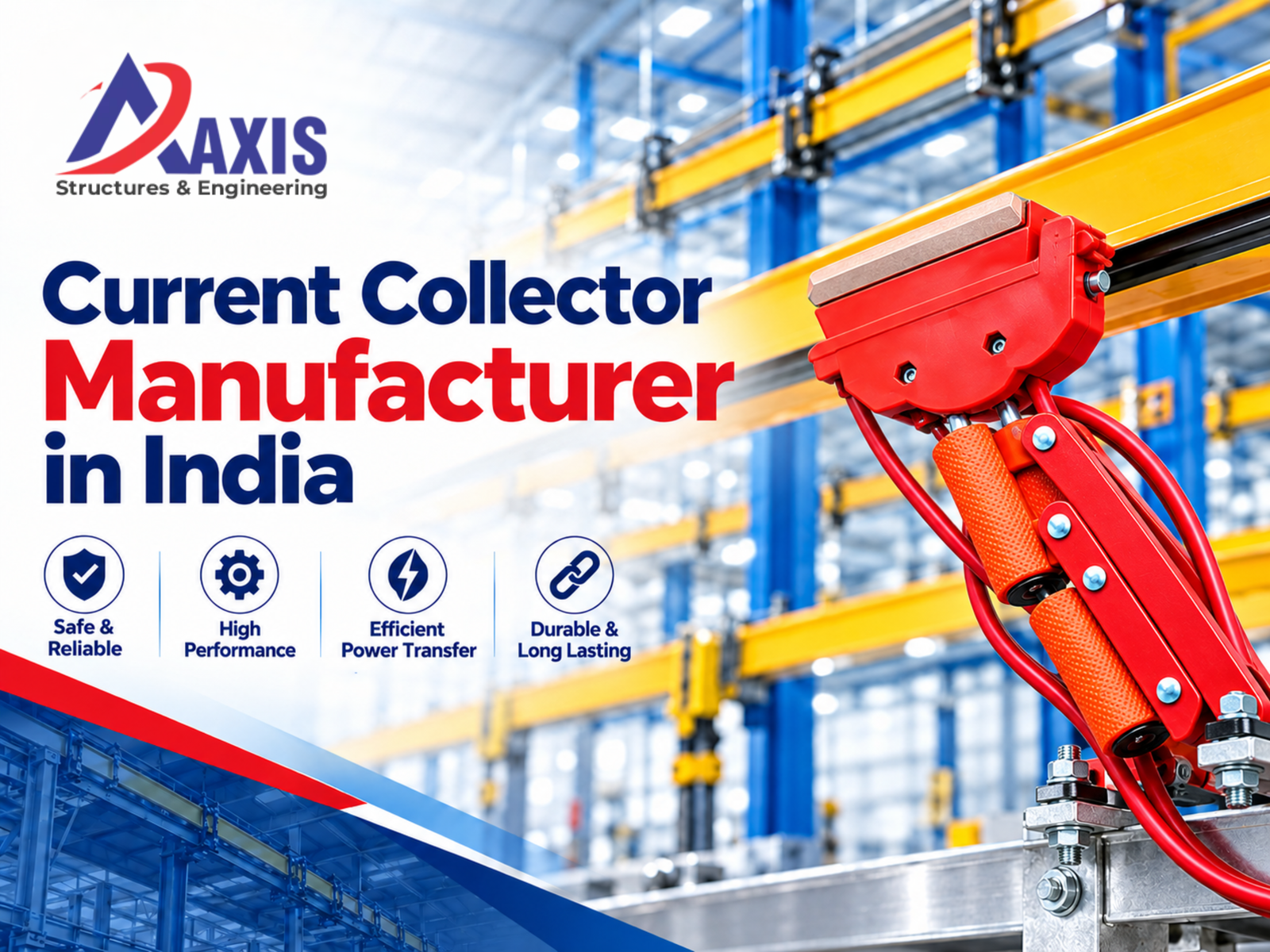
A crane may travel smoothly and still stop unexpectedly because its electrical contact is poor. The problem is often small: a worn collector shoe, a stiff arm or a conductor rail joint that the shoe cannot cross cleanly. That is why a current collector deserves attention before the whole DSL busbar is blamed.
If you are looking for a Current Collector Manufacturer in India, start with compatibility rather than price or a catalogue photograph. Axis Cranes handles crane and material-handling equipment requirements, where the collector must suit the existing power rail, load and travel arrangement.
What Is a Crane Current Collector?
A current collector is the moving part of a conductor bar power supply system. The conductor rail stays fixed; the collector shoe slides along its contact surface and sends power through a flexible lead to the crane's electrical equipment.
It is not the same as the complete DSL busbar system. The rail carries power along the runway, while the collector draws that power into the moving crane. A mismatched shoe or holder can cause trouble even when the rail itself is in good condition.
Why contact quality matters
- Helps deliver electrical power while the crane travels along its conductor rail.
- Allows small designed movements between the shoe and rail through the collector arm.
- Works with the specified conductor bar profile and insulation arrangement.
- Makes the contact shoe an inspectable and, on suitable models, replaceable wear item.
- Requires correct alignment and contact pressure to avoid unnecessary wear or arcing.
Main Parts of a Current Collector Assembly
Collector assemblies vary by manufacturer and rail profile, but most crane applications use the following functional parts. Dimensions, materials and ratings must be confirmed from the actual model.
1. Contact shoe or brush
The shoe touches the conductive running surface. Carbon, graphite and metal-graphite contact materials are used in different systems. An alternative material is not automatically interchangeable: it must suit the rail material, holder and duty.
2. Spring-loaded collector arm
The spring mechanism applies contact force as the equipment moves. Too little pressure may cause intermittent contact; too much can increase friction and shoe wear. Use the collector maker's setting, not a universal pressure figure.
3. Mounting bracket and holder
The bracket sets the collector's position relative to the conductor rail. Check reach, travel allowance, orientation, fasteners and safe clearances. A correct electrical rating will not compensate for a misaligned mounting point.
4. Flexible lead and terminal connection
The collector lead carries current from the moving head into the crane circuit. Inspect terminal tightness, insulation, routing and strain relief. A loose lead can create heating that looks like a shoe problem.
— Practical guidance for Axis Cranes technical enquiries (illustrative wording; not a verified staff quotation)
Where Are Current Collectors Used?
Current collectors are used wherever a moving machine needs electrical supply through a compatible fixed conductor system. The arrangement depends on machine travel and the selected rail system.
- EOT and overhead cranes: power pickup along the crane runway.
- Gantry and workshop cranes: contact-based supply for suitable travel systems.
- Transfer cars and travelling machinery: conductor-rail supply on defined routes.
- Automated material handling: compatible rail-and-collector solutions for repeat travel.
- Production and fabrication facilities: crane electrification in controlled industrial areas.
- Outdoor installations: only where the selected collector and conductor rail are rated for the exposure.
How to Select the Right Current Collector
The quickest route to a useful specification is to identify what is already installed. Many replacement mistakes happen because the buyer knows the crane capacity but not the conductor rail profile.
Match the conductor rail first
Check whether the system uses an enclosed conductor profile or another approved conductor arrangement. Record rail make, profile, contact direction, pole count and the existing shoe shape. Cross-brand interchangeability must be confirmed rather than assumed.
Confirm the electrical duty
Check supply voltage, maximum operating current, duty cycle and any manufacturer-specified derating for temperature or operating conditions. The collector, flexible lead and conductor rail must be assessed as a system.
Review crane speed and movement
Travel speed, vibration, rail joints, transitions and mounting geometry influence whether the shoe can track smoothly. For curved or special paths, ask for explicit rail-and-collector compatibility.
Account for dust, moisture and heat
Foundry dust, humidity, heat and outdoor exposure can change the appropriate insulation and contact-material choice. Do not assume an indoor collector will work outdoors just because its current rating matches.
Current Collector Specifications Buyers Should Check
There is no single honest current or speed rating for every current collector. Ask for model-specific documentation covering the following points:
- Collector make, model and compatible DSL conductor rail profile.
- Rated current and voltage for the intended application.
- Number of poles and collector units required per circuit.
- Shoe composition and approved mating conductor material.
- Spring contact force and permissible shoe wear limit.
- Travel speed, permissible movement and mounting orientation.
- Collector arm reach, bracket dimensions and clearances.
- Ambient temperature, dust, moisture and exposure conditions.
- Flexible cable size, terminal arrangement and connection details.
- Replacement shoe availability and inspection instructions.
Practical note: An EOT crane's lifting capacity in tonnes does not tell you the required collector amperage. The electrical load and conductor-system design are the relevant inputs.
Buyer Tips and Common Current Collector Mistakes
Buyer tip: send clear photos with dimensions
Photograph the existing shoe, holder and conductor rail from the front and side. Add a ruler or the manufacturer's part number if available. A useful photo can prevent a costly almost-fitting replacement.
Buyer tip: ask about the wear part
Confirm whether the shoe can be replaced separately or whether the complete collector head must be changed. Ask for the approved wear limit and replacement instructions.
Common mistake: choosing by current rating alone
Two collectors can have similar current ratings but different shoe profiles, arm geometry or spring characteristics. They are not necessarily substitutes.
Common mistake: ignoring conductor joints
Repeated clicking or sparking at one position may point to a misaligned rail joint rather than a defective new collector. Check the rail track and joint condition with power isolated.
Common mistake: treating sparking as normal
Persistent arcing, burnt marks, unusual heat or intermittent power deserve investigation by a qualified electrical technician. Isolate and lock out the equipment before inspection or replacement.
Industries That Use Crane Current Collectors
Current collectors support conductor-rail electrification across facilities that operate electrically powered travelling cranes or material-handling machines, including:
- Steel processing and metal fabrication
- Heavy engineering and machine shops
- Automotive component manufacturing
- Warehouses and industrial logistics
- Foundries and casting facilities
- Infrastructure and equipment assembly yards
- General industrial material handling
Current Collector Manufacturer in India — Axis Cranes
Axis Cranes works in industrial lifting, crane equipment and material-handling applications. For a current collector enquiry, the useful starting point is the existing DSL conductor system and the operating requirement—not an unsupported promise that one collector fits every crane.
- Discussion of conductor rail and collector compatibility
- Review of buyer-provided electrical and mounting information
- Consideration of crane travel and installation environment
- Support for component-focused industrial crane enquiries
- Quotation discussions based on confirmed specifications and availability
For faster technical clarification, send a photograph of the collector and rail, existing part number, available drawings and the quantity required. If you are replacing a failed part, mention the actual symptom as well.
Frequently Asked Questions — Quick Buyer Answers
What is a current collector in an EOT crane?
A current collector is a moving electrical contact assembly that transfers power from a fixed conductor bar or DSL rail to an EOT crane. Its shoe tracks the rail while the crane travels.
How does a spring-loaded current collector work?
A spring applies contact force between the collector shoe and rail. The collector arm follows permitted movement so contact is maintained within the designed operating range.
What materials are used for current collector shoes?
Depending on the conductor system, shoes may use carbon, graphite or metal-graphite contact materials. Always use a material approved for the specific conductor rail.
Can I replace only the current collector shoe?
Sometimes. A shoe-only replacement makes sense when the holder, spring and lead remain in good condition and the replacement shoe matches the collector model.
How do I choose a current collector for a DSL busbar?
Match the conductor profile, operating voltage and current, travel speed, mounting dimensions, contact direction and environment. Do not select only by amperage.
Why does a crane current collector spark?
Worn shoes, incorrect spring force, uneven rail joints, contamination, loose wiring or misalignment can cause arcing. Have a qualified technician isolate the supply and investigate.
What details should I send for a current collector quotation?
Send photos, the current collector and rail make or model, ratings, number of poles, mounting dimensions, operating environment and required quantity.
Does Axis Cranes handle current collector enquiries in India?
Axis Cranes handles industrial crane and component enquiries in India. Share your conductor rail details to discuss collector compatibility and availability.
Need a Current Collector for Your Crane?
Send the existing rail profile, collector photos, required electrical ratings and quantity to Axis Cranes for a practical compatibility discussion.
Send an Enquiry WhatsApp Us


