


 Home
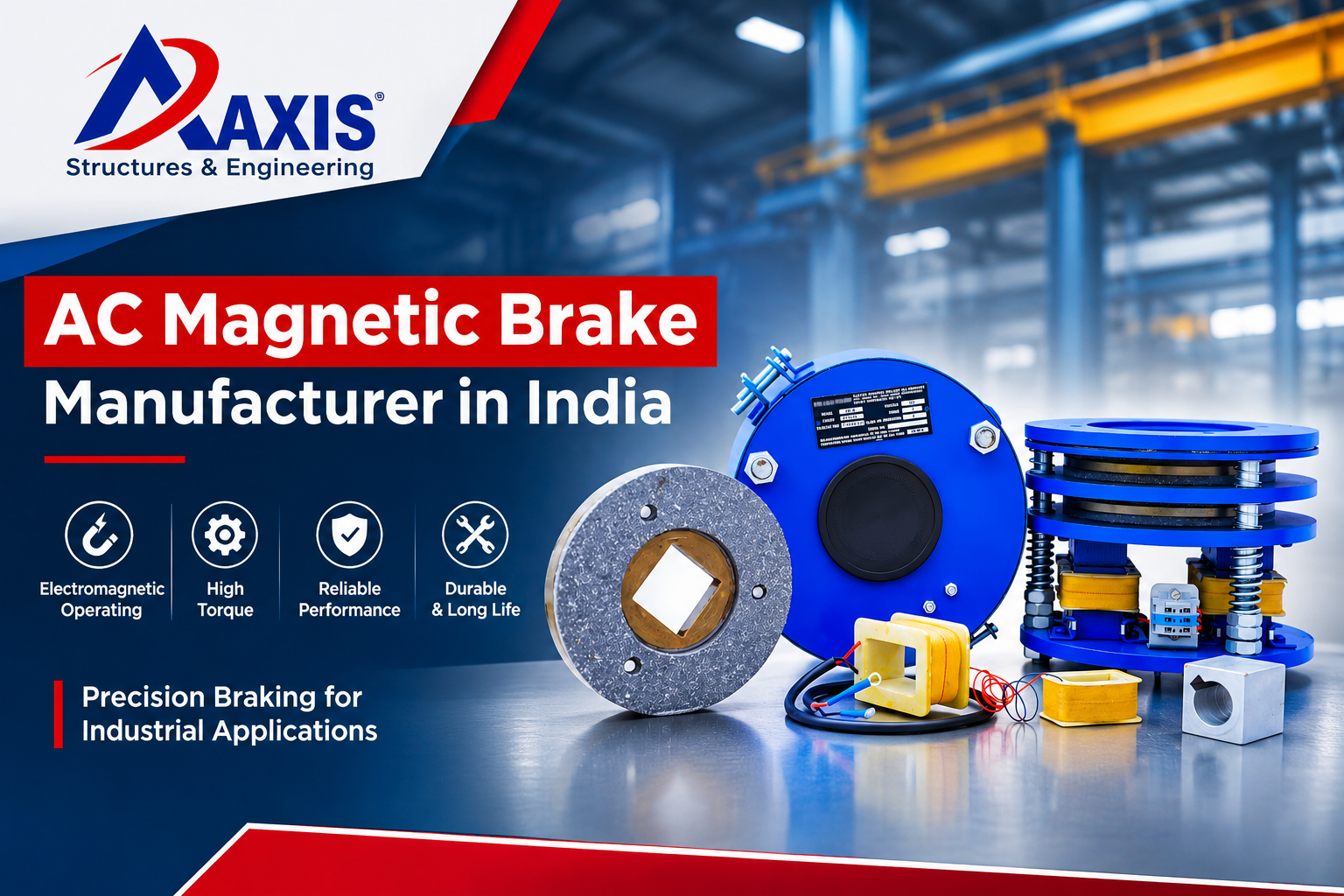
A motor can stop receiving power and still keep turning for a moment. On a crane drive, hoist or positioning mechanism, that extra movement matters. An AC magnetic brake is used where controlled stopping or holding is required, with the exact function determined by the brake design and the machine it serves.
Buyers looking for an AC Magnetic Brake Manufacturer in India should check more than the brake's outside dimensions. Coil voltage, rated braking torque, drum or shaft size, operating duty and the machine's control sequence all affect whether a brake will fit and work as intended. Axis Cranes lists AC magnetic brakes among its industrial crane components.
What Is an AC Magnetic Brake?
An AC electromagnetic brake uses a magnetic field generated by an AC-powered coil to operate a mechanical braking assembly. Depending on its construction, the mechanism can act on a brake drum, disc or other friction surface. The electromagnetic actuator and the friction parts perform different jobs: one operates the mechanism; the other develops the braking torque.
The term is sometimes used broadly in product enquiries. An AC magnetic shoe brake, an AC solenoid brake and a motor-mounted electromagnetic disc brake are not automatically interchangeable. Confirm the construction shown in the supplier's drawing.
What does the brake actually control?
- Stopping or holding a rotating shaft, where the brake is rated for that duty.
- Restraining unintended movement of a crane or machinery drive.
- Working with a motor starter, contactor, inverter or machine control circuit.
- Applying the specified braking action during normal shutdown or loss of supply, if the design is spring-applied.
- Maintaining adequate clearance when released so shoes or linings do not drag.
How an AC Magnetic Brake Works
In the commonly used spring-applied electromagnetic shoe arrangement, springs provide the braking force. The AC coil creates magnetic pull to release the shoes. The steps sound simple, but the timing and adjustment are important.
1. When the coil is energised
AC voltage is applied to the specified coil. Magnetic force moves an armature or plunger against spring pressure. The linkage releases the brake shoes from the drum, allowing the shaft to turn.
2. When the coil is de-energised
Magnetic pull falls away and the springs move the friction surfaces into contact. The resulting friction produces braking torque. The ability to stop a moving load or hold it at rest depends on the model rating, adjustments and application.
3. Why brake release timing matters
If the motor develops torque before the brake releases, the drive may struggle or the lining may wear. If the brake engages at the wrong point in a hoist sequence, the load can be affected. Control logic should be reviewed by a qualified engineer.
Editorial note: Suggested wording for the Axis Cranes technical team to approve; this is not a verified employee quotation.
Where AC Magnetic Brakes Are Used
Magnetic brakes are selected around the drive and its required stopping or holding function. They can be considered in these applications when the appropriate model and safety requirements are satisfied:
- EOT crane travel drives: braking bridge or trolley movement within a designed control system.
- Industrial hoists: holding or stopping duties only with a brake specifically engineered and approved for lifting service.
- Conveyors: controlled stopping or preventing unintended movement where appropriate.
- Material-handling machinery: repeated positioning at transfer points.
- Machine tools and industrial drives: shaft braking and position holding according to machine design.
- Fabrication and process facilities: drives with defined stopping cycles and operating environments.
A travel brake and a load-holding hoist brake may have very different requirements. Never assume suitability for a suspended load simply because a brake is marketed for cranes.
How to Choose an AC Magnetic Brake
Start with the driven equipment and what happens during stopping. A replacement brake should be checked against the original engineering specification, not merely against a photograph.
Confirm required brake torque
Torque describes the rotational braking effort, normally stated in N·m. The required value depends on load, drive speed, reflected inertia, deceleration requirements, friction conditions and applicable service factors. Have an engineer establish the correct rating; more torque is not always better for smooth operation.
Check AC supply and coil details
Match the brake coil's specified voltage, frequency and control arrangement. An AC motor supply does not prove the brake coil uses the same voltage. Some brake systems include transformers, rectifiers or dedicated switching components; check the actual wiring diagram.
Measure mounting and friction interfaces
For shoe brakes, confirm drum diameter, shoe width, mounting-hole pattern, shaft arrangement and surrounding clearance. For a motor-mounted unit, verify flange, shaft, hub and air-gap requirements. These dimensions cannot safely be guessed from motor power alone.
Describe duty and environment
Provide stopping frequency, operating hours, heat, dust, moisture and ambient temperature. Frequent cycling changes coil heating and friction wear. An outdoor installation may need a different enclosure and protection arrangement from a dry workshop.
AC Magnetic Brake Specifications to Request
Use the following as an enquiry checklist, not as confirmed ratings for Axis Cranes products. Obtain the exact model datasheet and approved drawing before ordering.
- Brake type: electromagnetic shoe, solenoid-actuated or motor-mounted design.
- Rated braking or holding torque and permitted duty.
- Coil rated voltage, AC frequency, current and allowable energisation cycle.
- Brake drum diameter, lining dimensions and compatible friction surface.
- Mounting dimensions, shaft or coupling interface and assembly weight.
- Release and application times, where specified by the manufacturer.
- Spring adjustment, running clearance and permitted lining wear.
- Insulation class, temperature limits and environmental protection, if provided.
- Control circuit compatibility, especially for inverter-driven motors.
- Inspection intervals, replacement linings, spare coils and service instructions.
Standards note: For crane installations, the relevant crane design and electrical safety requirements may include applicable Indian Standards such as IS 3177 and IS 807, subject to current edition and scope. Those are not blanket certifications for an individual magnetic brake. Ask the responsible engineer which brake-specific tests and standards apply.
Buyer Tips and Common Brake Selection Mistakes
Buyer tip: share the old brake nameplate
For replacement enquiries, send clear photos of the brake nameplate, coil marking, mounting, drum and complete installed assembly. A close-up of one part alone often hides the dimensions a supplier needs.
Buyer tip: explain whether stopping or holding comes first
Is the brake expected to stop a moving drive repeatedly, hold a stationary shaft or perform both? This one detail can change torque, thermal and safety requirements considerably.
Common mistake: assuming all AC brakes release on power failure
Spring-applied brakes generally engage when their release coil loses power. Other electromagnetic brake designs operate differently. Check the model's actual power-on and power-off state rather than relying on the words “magnetic brake.”
Common mistake: ignoring coil voltage and frequency
A coil marked for one supply should not be connected to an unverified source. Incorrect electrical matching can prevent proper release or cause overheating and premature failure.
Common mistake: overlooking air gap and lining wear
Excessive clearance, worn linings, poor alignment or sticking linkages can change response and holding performance. Adjustments must follow the original manufacturer's instructions, with equipment isolated and any suspended load safely supported.
Common mistake: changing brakes without checking controls
Mechanical fit does not confirm electrical compatibility. Check contactor sequencing, interlocks, motor control and release timing before commissioning. Safety devices are not to be defeated to make a brake operate.
Industries That Use Industrial Magnetic Braking
AC magnetic brake applications are found across facilities with powered motion and defined stopping requirements:
- Crane and lifting equipment installations
- Heavy engineering and machine-building shops
- Steel fabrication and material-handling facilities
- Warehousing, conveying and industrial logistics
- Production machinery and automation lines
- Plant maintenance and industrial drive systems
AC Magnetic Brake Manufacturer in India — Axis Cranes
Axis Cranes lists AC Magnetic Brakes in its crane components range. For a new installation or replacement enquiry, share your motor and brake information so the proposed component can be discussed against the actual application.
- Identify the equipment, motor power, speed and function.
- Share the required brake torque or the existing brake model details.
- Provide coil voltage and frequency from the nameplate or drawing.
- Send drum dimensions, mounting photographs and control information.
- Explain the operating duty, environment and any critical holding requirement.
One detail worth mentioning early: whether you need a new brake assembly or just a matching coil, shoe liner or other replacement component. It avoids unnecessary back-and-forth during quotation review.
Frequently Asked Questions — Quick Buyer Answers
What is an AC magnetic brake?
An AC magnetic brake uses an alternating-current electromagnetic actuator to operate a braking mechanism. In many industrial shoe brakes, a coil releases the spring-applied shoes and the springs reapply the brake when power is removed.
How does a spring-applied AC magnetic brake work?
Electrical power energises the coil, pulling a plunger or armature to release friction contact. When the coil is de-energised, springs press the shoes or lining against the braking surface to generate torque.
Is an AC magnetic brake suitable for an EOT crane or hoist?
It can be used in crane drive applications when appropriately engineered. Hoist load-holding service requires specific torque, safety, control and duty verification; do not substitute a general motor brake without approval.
What is the difference between an AC magnetic brake and an AC solenoid brake?
“AC magnetic brake” is a broad description. An AC solenoid shoe brake is one type that uses a solenoid actuator. Compare actual construction, dimensions, operating logic and ratings rather than names alone.
What details determine the correct brake torque?
Load, motor speed, gear ratio, rotating inertia, required stopping time, operating frequency and holding duty all matter. The responsible engineer should calculate the needed torque and check the brake's rated service.
Does an AC magnetic brake apply automatically during power failure?
A spring-applied, electrically released model normally applies when its coil loses power. This behaviour must be confirmed for the selected brake, control circuit and intended safety function.
Why does an AC brake coil overheat or fail to release?
Possible causes include incorrect supply, prolonged energisation beyond the coil rating, excessive air gap, a sticking linkage or coil damage. Isolate the equipment and have a qualified technician diagnose it.
What should I send Axis Cranes for an AC magnetic brake quotation?
Send the brake nameplate or model, required torque, coil voltage and frequency, drum or shaft dimensions, mounting photos, motor details, duty cycle and the intended stopping or holding application.
Need an AC Magnetic Brake?
Share your brake model, coil supply, required torque, drum dimensions and operating duty with Axis Cranes for a focused product enquiry.
Send an Enquiry WhatsApp Us


