 Home
A double girder crane can have enough rated capacity for a job and still be a poor fit for the way a factory works. A crab selected without checking hook approach, lifting height or operating duty may leave the operator struggling to reach a machine or waiting through unnecessarily slow lifting cycles.
For buyers looking for a Double Girder Crab Manufacturer in India, the enquiry should start with the actual lifting task. Axis Cranes can be contacted with the crane arrangement, load details and operating requirements to discuss a suitable configuration. Here is what to check before requesting a quotation.
What Is a Double Girder Crab and How Does It Work?
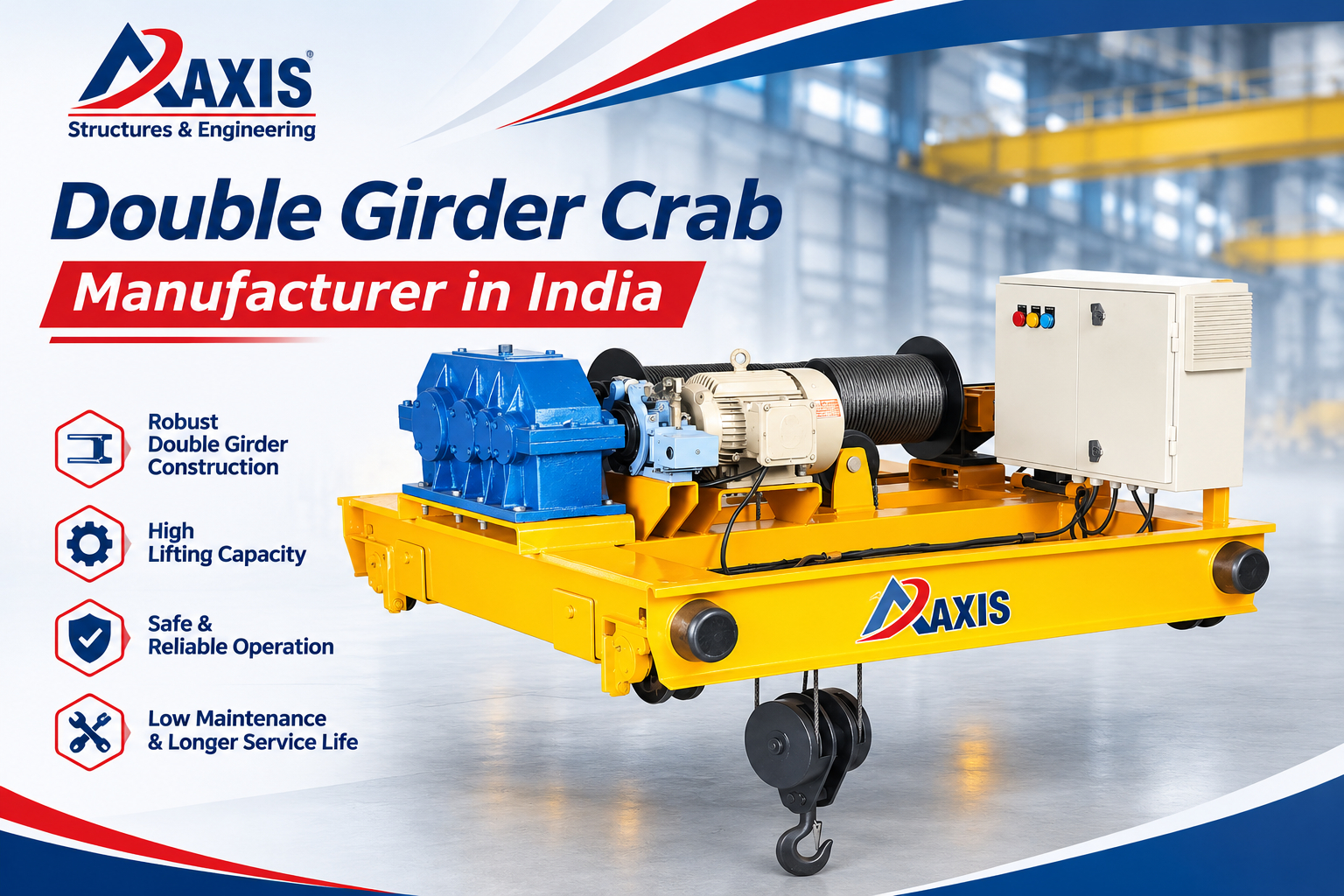
The hoisting motor drives a rope drum through a transmission, typically a reduction gearbox. Wire rope passes through the designed reeving arrangement to raise or lower the hook block. A separate cross-travel drive moves the trolley across the bridge. Brakes and appropriate control and limiting devices support controlled operation.
A crab trolley combines lifting and cross travel on a supporting frame. A double girder EOT crane includes the bridge, end carriages and long-travel system as well. This distinction matters when comparing a trolley-only quote with a complete crane quotation.
What a correctly selected double girder crab must provide
- Rated lifting capacity suitable for the approved load and lifting attachments.
- Required hook travel, upper hook position and usable hook approaches.
- Compatibility with trolley rail gauge, wheel loads and bridge structure.
- Hoisting and cross-travel speeds appropriate for the process and duty.
- Access for inspection, maintenance and safe servicing.
Double Girder Crab Types and Main Components
A crab may use an open winch arrangement or a packaged wire rope hoist mounted on a trolley. The configuration depends on the lifting duty, available space and crane design; the term double girder does not establish a universal specification.
1. Hoisting motor, gearbox and rope drum
The motor and reduction gearbox deliver the torque required at the drum. Drum geometry, rope anchorage and reeving must be engineered together for the required lift, rope forces and operating duty.
2. Wire rope, sheaves and hook block
The rope and sheave arrangement transfers lifting force to the hook block. Rope construction, diameter, reeving and hook selection must follow the approved design. Changing the number of rope falls can affect speed, travel and forces, so it requires engineering review.
3. Crab frame and cross-travel drive
The frame supports the hoisting components and transfers loads through the trolley wheels to the bridge rails. Wheel spacing, rail gauge, drive arrangement and maximum wheel reactions must be compatible with the bridge.
4. Brakes, controls and protective devices
The design should address hoisting and travel braking, upper and lower travel limits as applicable, overload protection and emergency stopping. Control options may include pendant, radio remote or variable-frequency drives where appropriate. Confirm the exact scope and operating logic.
Editorial note: Proposed wording for technical-team approval; not a verified employee quotation.
Where Double Girder Crabs Are Used
Double girder crabs are used where loads need controlled lifting and horizontal positioning across a crane bridge. Typical applications include:
- Double girder EOT cranes: moving machinery, components and production materials across factory bays.
- Gantry and goliath cranes: handling loads in yards and fabrication facilities where the design supports a crab trolley.
- Machine shops: positioning dies, fixtures and heavy workpieces.
- Assembly lines: handling large subassemblies at designated workstations.
- Maintenance bays: lifting motors, gearboxes and equipment for planned servicing.
- Crane modernisation: replacing an existing crab after structural and electrical compatibility review.
How to Select the Right Double Girder Crab
Start with the load, lifting cycle and general arrangement drawing. The available hook height and clearances often matter just as much as the rated capacity.
Match trolley gauge and hook approach
Confirm the centre-to-centre spacing of trolley rails, rail profile, available headroom and end clearances. Review the hook approach on both sides of the bridge so the load can reach the intended work area.
Confirm lifting capacity and operating duty
Record the heaviest expected load, lifting attachments, cycles per hour, operating hours and typical load spectrum. Two cranes of equal capacity can need different mechanism classifications because one handles occasional maintenance lifts and the other operates repeatedly during production.
Choose lifting and cross-travel speeds
Specify the required hoisting speed, positioning needs and trolley travel speed. Low-speed positioning may be useful for fitting dies or machinery; a suitable drive and brake arrangement should be evaluated for the actual process.
Check bridge loads and available headroom
A heavier crab can change bridge reactions and available lifting capacity. Obtain the proposed trolley self-weight, maximum wheel reactions and general arrangement for engineering review. Do not assume a replacement is interchangeable simply because its rated capacity matches.
Double Girder Crab Specifications to Confirm Before Ordering
Use the following as an enquiry checklist, not an Axis Cranes technical datasheet. Final values must be confirmed through approved drawings and the agreed supply specification.
- Rated lifting capacity and weight of lifting accessories.
- Required lifting height, upper hook position and hook approaches.
- Crane span, trolley rail gauge, rail profile and available headroom.
- Crab frame dimensions, wheelbase and maximum wheel reactions.
- Hoisting speed and cross-travel speed, including positioning requirements.
- Duty classification, load spectrum, starts and operating hours.
- Motor, gearbox, drum, wire rope and reeving arrangement.
- Braking system, limit devices, overload protection and control interface.
- Power supply, electrical enclosure requirements and environmental conditions.
- Material grades, inspection requirements and applicable design documentation.
- General arrangement drawing, installation scope and commissioning responsibilities.
Standards and safety note: Applicable Indian and international crane standards should be identified in the project specification, including relevant requirements for crane design, mechanism classification and inspection. Confirm the applicable editions with the responsible engineer. This guide does not establish Axis Cranes certification or compliance; installation and testing must be handled by competent personnel.
Buyer Tips and Common Double Girder Crab Purchasing Mistakes
Buyer tip: send the general arrangement drawing
A drawing showing the bridge, trolley rails and hook envelope is far more useful than a photo of the old crab alone. Include the actual working area and any obstructions above or below the crane.
Buyer tip: describe a normal working shift
Mention how often the crane lifts, the usual load and whether operators need slow positioning. The occasional maximum load tells only part of the story. This information helps the engineer assess the mechanism duty.
Buyer tip: define the quotation scope
Confirm whether the quote includes the trolley frame, hoist, cross-travel drives, electrical panel, controls, protective devices, installation and commissioning. Different scopes can make two otherwise similar prices misleading.
Common mistake: ordering only by crane tonnage
The same rated capacity does not guarantee the same rail gauge, wheel loads, headroom or duty. A replacement crab should be checked against the existing bridge and runway design.
Common mistake: overlooking hook approach and clearance
A trolley may fit the rails but leave the hook unable to reach the required workstation. Check the full hook envelope and any interference with bridge structure, roof services or adjacent equipment.
Common mistake: ignoring inspection and maintenance access
A component that is difficult to reach can complicate routine servicing. Review safe access to brakes, rope drum, sheaves, gearbox and electrical equipment. Follow the approved inspection schedule and isolate equipment before maintenance.
Industries Using Double Girder Crabs
Double girder crane trolleys are used in a range of industrial material-handling operations, including:
- Steel plants and metal-processing facilities
- Heavy engineering and machine-building workshops
- Fabrication yards and structural-steel facilities
- Automotive manufacturing and die-handling bays
- Power generation and industrial maintenance facilities
- Precast and infrastructure manufacturing facilities
Double Girder Crab Manufacturer in India — Axis Cranes
When approaching Axis Cranes for a double girder crab, explain the lifting application and whether the requirement is for a new crane or a replacement trolley. A useful enquiry should include:
- Rated load, lifting height and required hook positioning.
- Crane general arrangement, trolley rail gauge and headroom.
- Operating duty, load spectrum and required speeds.
- Electrical supply, control preferences and installation environment.
- Requested supply scope, drawings, inspection and commissioning requirements.
The right crab is the one that fits the crane and the work it performs. Share your operating requirements with Axis Cranes and request a configuration review and itemised quotation before finalising the purchase.
Frequently Asked Questions — Short Buyer Answers
What is a double girder crab used for?
A double girder crab lifts and lowers loads and moves them across the bridge of a double girder crane. It combines a hoisting mechanism, trolley frame and cross-travel system.
How is a double girder crab different from a single girder hoist?
A double girder crab typically runs on rails supported by two bridge girders, while a single girder hoist trolley commonly travels on the lower flange of one girder. The suitable arrangement depends on load, duty, headroom and structural design.
What lifting capacity should I choose for a double girder crab?
Choose a rated capacity based on the maximum intended load and applicable lifting accessories, with engineering verification of the crane structure and operating duty. Axis Cranes should confirm available capacities for the specific enquiry.
Can an existing EOT crane be fitted with a replacement crab?
Yes, where engineering review confirms compatibility of rail gauge, wheel reactions, trolley weight, hook envelope, power supply and controls. Matching rated capacity alone is not sufficient.
What is the role of duty classification in crab selection?
Duty classification reflects the expected usage and load spectrum. It helps engineers select mechanisms for the required operating conditions and design life rather than relying solely on rated capacity.
Can a double girder crab use variable-frequency drives?
Variable-frequency drives may be specified for hoisting or cross travel where suitable for the mechanism, braking system and control requirements. Confirm the proposed configuration with the manufacturer.
What details are needed for a double girder crab quotation?
Provide rated load, lifting height, rail gauge, crane drawings, hook approach, speeds, duty, electrical supply, operating environment and whether installation or commissioning is required.
What maintenance does a double girder crab require?
Follow the approved maintenance schedule for wire ropes, hooks, sheaves, drums, brakes, gearboxes, trolley wheels, electrical controls and protective devices. Inspection and servicing should be performed by competent personnel.
Need a Double Girder Crab for Your Crane?
Share your crane drawing, rated load, lifting height, trolley gauge and operating duty with Axis Cranes. Request a suitable configuration and quotation for your lifting application.
Send an Enquiry WhatsApp Us