 Home
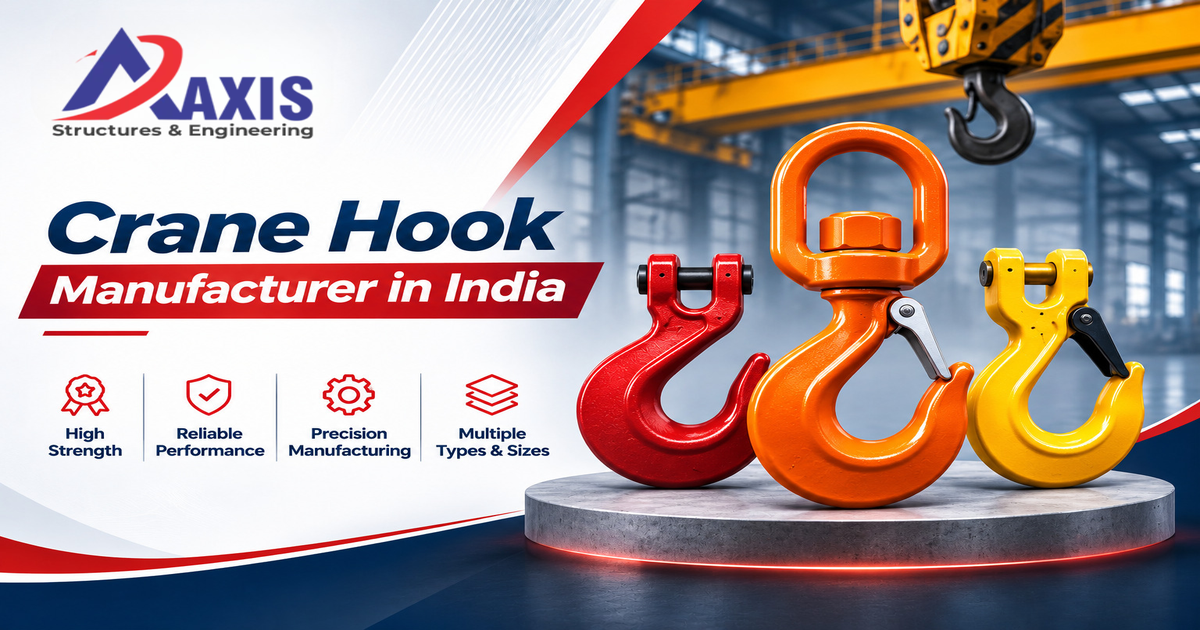
A crane hook looks simple until a replacement has to fit the old block. Capacity is important, but it is not the whole specification. The shank has to fit the bearing and nut arrangement, the hook must clear the lifting gear, and the assembly must suit the crane duty. A hook that looks almost identical in a photograph can still be the wrong part.
If you are looking for a Crane Hook Manufacturer in India, this Axis Cranes guide explains the details worth checking before you enquire. It covers the practical differences between hook designs, what a drawing should show, and the inspection questions that matter when a crane or hoist is already in service.
What Is a Crane Hook and How Does It Work?
A crane hook transfers load from the lifting attachment into its suspension arrangement, commonly a hook block on an EOT crane or wire rope hoist. Depending on design, the block can contain sheaves, bearings, a crosshead and a hook with a shank and retaining arrangement. The rope reeving and block construction determine how the load reaches the hoist machinery.
The hook should seat the approved lifting connection in its bowl or saddle, rather than carry load on the tip. A latch, if fitted, helps retain a slack sling; it is not a load-bearing substitute for correct rigging. Side loading and shock loading must not be assumed acceptable just because the rated capacity is marked on the hook.
Parts and measurements that matter
- Hook body and saddle: the curved load-engaging section and intended seating area.
- Throat opening: the opening between the tip and body; useful for both attachment fit and inspection.
- Shank and attachment: threaded or otherwise engineered connection to the hook-block assembly.
- Bearing and retaining parts: design-specific components that support the hook and may permit rotation.
- Latch, where specified: a retaining feature whose condition and clearance should be checked.
Types of Crane Hooks and Their Uses
Hook names can refer to shape, attachment method or manufacturing process. A single hook, a double hook and a swivel hook are not interchangeable descriptions. Check the actual hook drawing and its approved application instead of ordering from a category name alone.
1. Single crane hook
A single crane hook has one curved load-engaging profile. It is commonly seen on general-purpose overhead cranes and hoists. Capacity, throat size, section geometry and shank design vary; there is no universal single-hook size for a given crane tonnage.
2. Double or ramshorn crane hook
A double crane hook, often called a ramshorn hook, has two opposing hook profiles. It may suit specific heavy-duty or balanced lifting arrangements, but both hook loading and the suspension arrangement need engineering review. Two hook arms do not automatically mean twice the rated capacity.
3. Forged crane hook
Forged crane hooks are formed through a controlled forging process and subsequently finished and inspected to the required specification. Forging is a manufacturing method, not a capacity rating or a certification on its own. Material selection, heat treatment and acceptance checks are design-specific.
4. Swivel hooks and complete hook blocks
A swivel arrangement may allow hook rotation through an approved bearing design. A crane hook block includes other parts such as sheaves and the crosshead; replacing only the hook is different from replacing the whole bottom block. Confirm exactly which assembly is needed.
Where Are Crane Hooks Used?
Crane hooks are fitted where approved lifting accessories need to connect to a crane or hoist. The hook configuration must reflect the machine, rigging method and operating conditions.
- EOT and overhead cranes: hook blocks for lifting machinery and fabricated components inside factories.
- Gantry and goliath cranes: material-handling and yard lifting using specified hook assemblies.
- Electric wire rope hoists: compact hook-block configurations matched to the hoist reeving.
- Steel and fabrication plants: lifting duties that can involve heat, repeated cycles or specialised attachments.
- Infrastructure and equipment yards: controlled handling of assemblies using suitable rigging.
- Maintenance and refurbishment: replacement of worn or damaged hooks following a qualified assessment.
How to Select the Right Crane Hook
Start with the crane or hoist OEM drawing, not a web image. For a new lifting arrangement, the hook selection belongs in the full lifting-system design. For a replacement, record the existing identification and dimensions before removing the assembly.
Confirm rated load and lifting duty
Provide the crane's rated capacity and the hook assembly's required rating. Also explain how it works: frequent starts, repeated lifting, attachments and any demanding service conditions. A capacity marking is not permission to ignore side pull, dynamic effects or the rigging arrangement.
Measure shank, nut and hook-block fitment
Check shank diameter and length, thread details where present, seating faces, bearing interface and available headroom. A different shank shoulder or nut position can prevent a hook from fitting even when the throat opening appears correct.
Match hook geometry to the lifting accessory
Ask for the throat opening, hook section and saddle dimensions, plus the size and shape of the sling eye, shackle or other approved attachment. The attachment needs proper seating and clearance. Never plan a lift that loads the point of the hook unless that use is expressly engineered and approved.
Check markings, documentation and environment
Specify required identification, rated-load marking and project documents. Temperature, corrosion, exposure to impact and the planned inspection regime may affect material and finish selection. Ask what records are available for the actual item rather than assuming every hook carries the same paperwork.
Crane Hook Specifications to Confirm Before Ordering
This is an enquiry checklist, not a published Axis Cranes specification range. Final values, tolerances, ratings and materials must come from the approved product drawing or supplier's verified data.
- Crane or hoist make, model, rated lifting capacity and hook-block arrangement.
- Hook style: single, double or another approved profile.
- Hook-only replacement or complete hook-block requirement.
- Existing hook identification, drawing, part number and rated-load marking.
- Hook throat opening, saddle dimensions and cross-section measurements.
- Shank diameter, overall length, thread details, shoulder and retention method.
- Crosshead, nut, thrust bearing and sheave-block interfaces where applicable.
- Operating duty, lifting attachments, environment and special loading conditions.
- Specified material grade, heat treatment and surface finish if required by design.
- Applicable design, inspection and testing requirements, plus document needs.
- Quantity, dimensioned sketches and photographs with a visible scale.
Standards note: Depending on the project and hook type, specifications may refer to IS 3815, IS 15560, DIN 15401, EN 13001-3-5 or ASME B30.10. These documents do not all cover identical requirements. The correct edition and applicability must be confirmed by the project engineer. Mentioning them does not mean that Axis Cranes holds a particular certification or that every hook conforms to all of them.
Buyer Tips and Common Crane Hook Mistakes
Buyer tip: photograph the hook before dismantling
Capture the hook from the side and front, plus the shank, retaining nut, crosshead and any markings. A photo beside a ruler is useful. A front-facing picture on its own usually tells very little about the shank fit.
Buyer tip: ask whether the entire block is worn
If the hook is damaged, also have a qualified person check the block, bearing, crosshead, retention parts and other related components. Changing one visible part may not address the original wear mechanism.
Buyer tip: confirm documentation before the order
When the project calls for material records, dimensional inspection or specific testing, say so at enquiry stage. It is much easier to agree on inspection and traceability before a component is made or dispatched.
Common mistake: ordering by tonnage alone
Two hooks can have the same nominal rated load and completely different shanks, throat openings and bearing arrangements. A dimensioned drawing prevents a surprisingly common mismatch.
Common mistake: treating the latch as a lifting surface
A latch helps retain an unloaded or slack connection; it is not the place to carry the lift. Rigging must seat correctly in the hook saddle and comply with the equipment and accessory instructions.
Common mistake: reusing a visibly distorted hook
Cracks, abnormal wear, a widened throat, twist or bending require prompt action under the applicable inspection procedure. Do not heat, weld or bend a damaged hook back into shape as an improvised repair. Isolate the equipment and obtain qualified assessment.
Industries That Use Crane Hooks
Appropriately specified hooks serve lifting equipment across many industrial settings, including:
- Heavy engineering and machinery assembly
- Steel handling and metal fabrication
- Automotive and general manufacturing
- Warehousing and material-handling operations
- Power, cement and process-industry maintenance
- Infrastructure and industrial construction yards
Crane Hook Manufacturer in India — Axis Cranes
Axis Cranes is the company behind this crane hook enquiry guide. If you need a hook for an EOT crane, gantry crane or hoist, describe the existing arrangement and ask for confirmation of the suitable product configuration. Avoid assuming a hook shown online will fit simply because its shape looks familiar.
- Identify the crane or hoist and its rated capacity.
- State whether the requirement is for a single hook, double hook or complete hook block.
- Share the shank, throat and bearing or nut interface dimensions.
- Explain the lifting duty, environment and any special attachment.
- Attach a drawing or measured sketch and request relevant technical documentation.
Missing the old model number? Say so. A clear sketch of the hook body, shank and crosshead is far more useful than guessing a part code. Send those details to Axis Cranes so the enquiry can start with the actual fitment needs.
Frequently Asked Questions — Short Buyer Answers
What is a crane hook and where is it used?
A crane hook is a load-engaging component that connects suitable slings or lifting attachments to a crane or hoist. It is normally fitted to a hook block or other approved suspension assembly.
What is the difference between a single hook and a double crane hook?
A single hook has one curved load-engaging body. A double or ramshorn hook has two opposing hook profiles and may be selected for suitable heavy-duty lifting arrangements. Selection depends on the crane design and approved load path.
How do I select a crane hook for an EOT crane?
Start with the crane rated capacity, hook or hook-block drawing, suspension arrangement, shank dimensions, lift duty and applicable standard. An engineer must verify compatibility and load rating before use.
What dimensions should I provide for a replacement crane hook?
Share the existing hook drawing or model, rated load, throat opening, hook section, shank diameter and length, nut or bearing interface, hook-block dimensions and clear photographs with a scale.
Are forged crane hooks always made from the same steel grade?
No. Material and heat treatment depend on the approved hook design and applicable specification. Ask for the required material grade, traceability and inspection documents rather than assuming one grade fits every hook.
What should be checked during crane hook inspection?
Check identification and rated-load markings, cracks, wear, corrosion, bending, twist, throat opening, latch condition where fitted and attachment security. Use the OEM and applicable inspection criteria; remove suspect hooks from service for qualified assessment.
Can a damaged crane hook be welded, heated or straightened?
Do not weld, heat or straighten a load-bearing hook as a routine repair. Such work can affect its strength and requires explicit authorization under the applicable manufacturer and engineering procedures; replacement is often the safer route.
What details should I send Axis Cranes for a crane hook enquiry?
Send the crane or hoist type, rated capacity, existing hook or hook-block drawing, dimensions, attachment arrangement, service environment, quantity and requested documentation. State whether you need only the hook or a complete hook block.
Need a Crane Hook or Hook Block for Your Crane?
Share your crane capacity, existing hook or block drawing, shank and throat dimensions, lifting duty and photographs. Axis Cranes can review the enquiry against your required fitment.
Send an Enquiry WhatsApp Us