

 Home
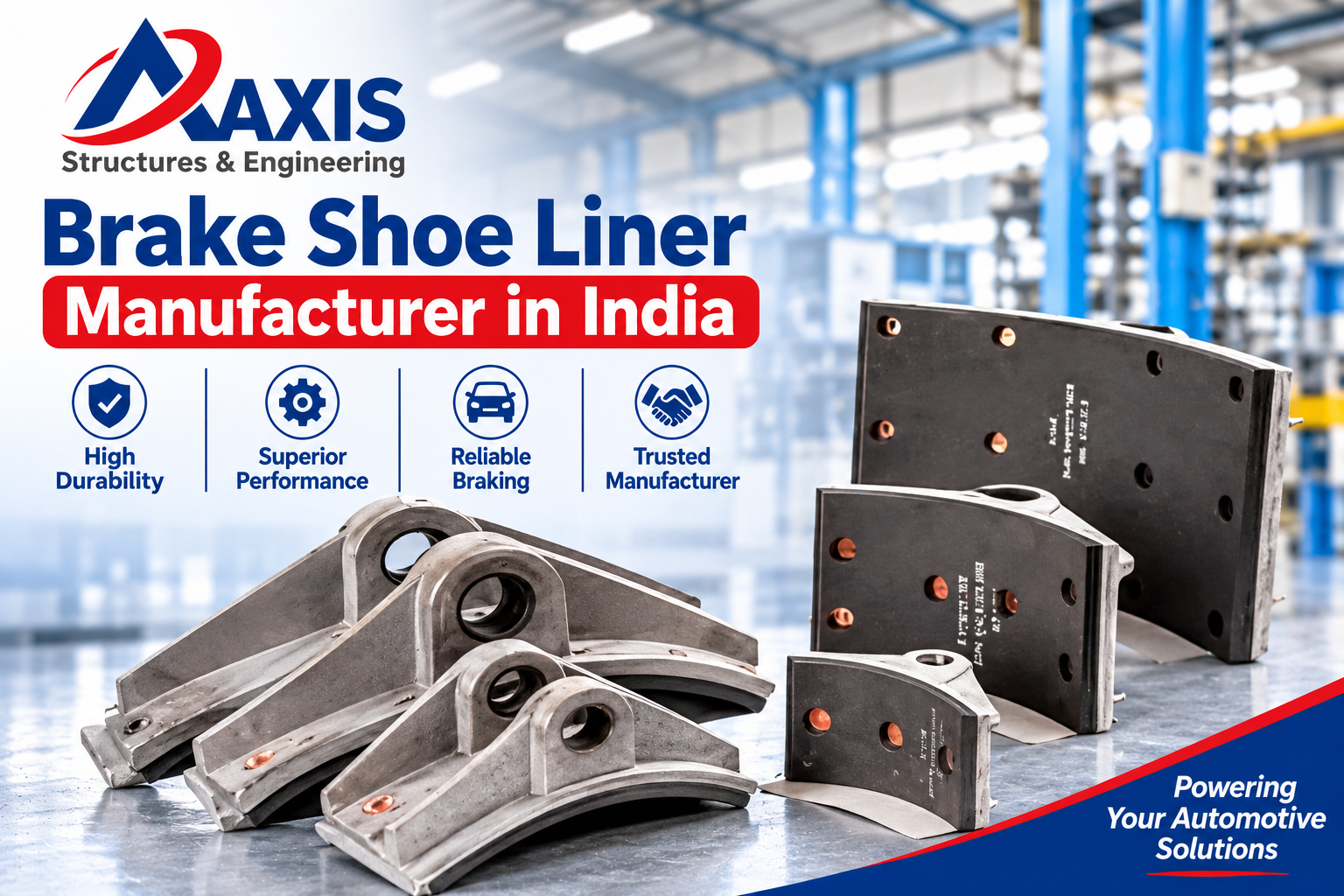
A brake shoe lining is a small component, but its fit matters. On an industrial crane, a lining that does not sit correctly against the brake drum may affect braking, wear or release. When maintenance teams order a replacement, they often have an old sample but no drawing. That is where a few careful measurements save time.
If you are looking for a Brake Shoe Liner Manufacturer in India, start with the brake assembly rather than a photo of the lining alone. Axis Cranes lists brake shoe liners among its industrial crane components. This guide explains what to check before requesting a replacement for a crane, hoist or other compatible industrial drum brake.
What Is a Brake Shoe Liner and How Does It Work?
A brake shoe liner, also called a brake lining or friction lining, is the wearing surface fitted to the curved shoe of a drum brake. The shoe supports the lining; the lining contacts the brake drum. They are related parts, not the same component.
Many industrial crane drum brakes are spring-applied and electrically or hydraulically released, but the exact operating arrangement depends on the brake model. The liner must work with that specific brake, its drum and its duty. Replacing friction material does not correct a defective spring, thruster or linkage.
What a properly matched liner needs to do
- Provide appropriate friction against the specified drum surface.
- Fit the shoe curvature without gaps caused by the wrong radius.
- Stay securely attached through the specified operating conditions.
- Tolerate the intended braking cycles and associated heat.
- Allow inspection and replacement under the brake maker's instructions.
Brake Shoe Liner Types and Mounting Options
The word “liner” does not describe one universal spare. Lining composition, attachment and supply form can vary, even between brakes that appear similar from outside.
1. Bonded brake shoe lining
A bonded lining is secured to its carrier using a suitable bonding process. Bonding method and service-temperature capability must suit the brake design. Do not substitute a bonded arrangement for a riveted one unless the brake manufacturer approves it.
2. Riveted or mechanically fixed lining
Some brake shoes use rivets or another specified fastening arrangement. Hole location, countersink, fixing details and remaining wear allowance matter. A lining cut to the right outside dimensions can still be wrong if its mounting pattern does not match.
3. Industrial friction-material grades
Friction linings may use different composite formulations, including non-asbestos grades where specified. The right choice depends on friction behaviour, wear, temperature and drum compatibility. Do not assume that every Axis Cranes liner has a particular material grade or test rating without confirming its product documentation.
4. Replacement liner or complete brake shoe assembly
Sometimes only the friction material is replaced; sometimes the shoe and lining are supplied as an assembly. If the carrier is cracked, distorted or otherwise unserviceable, fitting new material to it is not a suitable shortcut. Ask which supply form is compatible with your brake.
Editorial note: Proposed expert-style wording for review, not a verified statement from an Axis Cranes employee. Obtain team approval before publishing as an attributed quotation.
Where Industrial Brake Shoe Liners Are Used
Brake shoe linings are relevant wherever a compatible friction drum brake is part of the equipment. Actual suitability must be confirmed by brake type, required stopping or holding function and the operating environment.
- EOT cranes: suitable drum-brake arrangements on hoisting or travel drives.
- Gantry and goliath cranes: selected hoist and travelling mechanisms with shoe-type brakes.
- Electric wire rope hoists: compatible motor or drive braking systems.
- Industrial winches: designated braking and holding arrangements.
- Workshop material-handling systems: brakes on specified moving equipment.
- Plant maintenance: replacement of worn linings in existing industrial brake assemblies.
How to Select the Right Brake Shoe Liner
Start with the existing brake nameplate, spare-part reference and maintenance manual. If those are missing, measurements and clear photographs become important. An apparently close fit is not enough for a safety-related braking component.
Confirm brake model and drum diameter
Record the brake make, model and the nominal drum diameter. Check the curved shoe profile rather than relying on a flat measurement of the old liner. A mismatch in radius can reduce the effective contact area.
Match the friction grade, not just the size
Ask about the proposed lining material and its compatibility with the drum, braking duty and required friction behaviour. A different grade may alter stopping characteristics or heat response. The brake designer or qualified maintainer should approve any substitution.
Account for operating cycles and heat
Note whether the brake is used for occasional maintenance lifting or repeated production cycles. Speed, load, stopping frequency and ambient heat affect the duty. A lining that is dimensionally correct is not automatically suitable for a more demanding cycle.
Check how the lining attaches to the shoe
Specify whether the existing lining is bonded, riveted or supplied as a fitted shoe assembly. Share hole pitch and fixing details where applicable. Also check the condition of the drum and the shoe before treating the lining as the only part needing attention.
Brake Shoe Liner Specifications to Confirm Before Ordering
The following is a buyer enquiry checklist, not a published Axis Cranes technical datasheet. Actual sizes, grades and performance data must be confirmed against the relevant product and brake model.
- Equipment type and the original brake manufacturer, model or part number.
- Brake drum diameter and any relevant drum condition observations.
- Brake shoe radius or curvature from the approved drawing or sample.
- Lining width, arc length and required thickness.
- Fixing-hole count, spacing, orientation and countersink details, if any.
- Bonded, riveted or complete-shoe supply arrangement.
- Required friction material or grade, including asbestos-free requirements.
- Brake duty, drive speed and braking or holding requirements.
- Site conditions such as dust, heat, moisture or chemical exposure.
- Dimensioned drawing, photographs or a labelled existing sample.
- Quantity, machine location and any inspection or documentation needs.
Standards and safety note: There is no single lining thickness, friction coefficient or replacement interval that safely fits every crane brake. Follow the brake OEM's instructions and applicable crane and machinery safety requirements. Project standards must be checked for their actual scope; mentioning a standard is not a claim that a particular Axis Cranes liner is certified to it.
Buyer Tips and Common Brake Lining Mistakes
Buyer tip: photograph the lining beside a ruler
Take front, side and mounting-side photos. Include a ruler, nameplate and any part markings. A photograph helps, but it does not replace a measurement of thickness and shoe curvature.
Buyer tip: ask about the complete mating surface
Inspect the drum for scoring, unusual wear or contamination. A new liner installed against a damaged drum may give poor contact. The maintenance decision should consider the full assembly.
Buyer tip: confirm whether you need linings or lined shoes
Some enquiries say “brake shoe” when the buyer actually needs only the friction material. Others need a fitted assembly. Clarifying this early prevents a quotation for the wrong item.
Common mistake: ordering by brake drum size alone
The drum diameter is useful, but shoe width, curvature, attachment and grade can still differ. Two parts that fit the same nominal drum size are not necessarily interchangeable.
Common mistake: ignoring oil, grease or uneven wear
Friction surfaces must not be lubricated. If the old lining has been contaminated or worn unevenly, identify the cause before reassembly. Simply fitting new material may leave the original fault in place.
Common mistake: using a universal wear thickness
Replacement limits depend on the brake design and lining attachment. Check the OEM's minimum thickness and service procedure. A trained technician should set clearances and verify brake operation before returning equipment to service.
Industries Using Crane Brake Shoe Liners
Industrial drum-brake linings may be found in the material-handling and lifting equipment used across:
- Engineering and fabrication workshops
- Steel processing and metalworking facilities
- Automotive component and machinery plants
- Warehousing and industrial logistics operations
- Power plants and process-industry maintenance
- Infrastructure fabrication and equipment yards
Brake Shoe Liner Manufacturer in India — Axis Cranes
Axis Cranes includes Brake Shoe Liner in its crane components and spares range. For a replacement enquiry, the useful starting point is your existing brake identification and the liner's fitment details, not a generic claim about friction or service life.
- Identify the brake make, model and existing part reference.
- Provide drum size, lining dimensions and mounting information.
- Explain where the brake is installed and its operating duty.
- Share photos, a drawing or a sample reference when possible.
- Ask for proposed fitment, material details and quotation inclusions.
If the brake model is unknown, say so in the enquiry. That is common with older equipment. Good photographs and careful measurements give the discussion a much more useful starting point than a guessed part number.
Frequently Asked Questions — Short Buyer Answers
What does a brake shoe liner do in a crane brake?
A brake shoe liner is the replaceable friction material attached to a brake shoe. When the shoe presses the lining against the rotating brake drum, friction helps slow or hold the mechanism as designed.
What is the difference between a brake shoe and a brake shoe liner?
The brake shoe is the shaped carrier within the brake assembly. The liner is the friction-facing material fixed to that shoe. Some maintenance jobs need only a suitable liner; others require the complete shoe assembly.
Which measurements are needed for a replacement brake shoe liner?
Confirm the brake make and model, drum diameter, shoe curvature, lining width, length and thickness, mounting method and any fixing-hole dimensions. A drawing or labelled sample helps avoid a mismatch.
Are all industrial brake shoe linings asbestos-free?
No material composition should be assumed. Ask for the proposed friction grade and written confirmation of asbestos-free composition when that is a project requirement, along with available material information.
Can one brake shoe liner fit different crane brake models?
Not automatically. Similar-looking liners may differ in curvature, thickness, mounting holes and friction behaviour. Compatibility must be checked against the original brake design and operating conditions.
When should a crane brake shoe liner be replaced?
Replace it at the wear limit or inspection criteria specified by the brake manufacturer, or when inspection identifies unacceptable damage, detachment or contamination. Do not apply a universal minimum thickness to every brake.
Why might a new brake lining slip or wear unevenly?
Possible causes include an incorrect lining grade, poor shoe-to-drum contact, contamination, misalignment, incorrect adjustment or a worn drum. A qualified technician should inspect the full brake instead of blaming the lining alone.
What should I send Axis Cranes for a brake shoe liner quotation?
Share the brake manufacturer and model, drum diameter, lining measurements, attachment method, quantity, duty and site conditions. Add clear photos, the existing part number or a dimensioned drawing if available.
Need a Brake Shoe Liner for an Industrial Crane?
Send Axis Cranes your brake model, drum diameter, lining measurements, fixing details and photos. A precise enquiry helps establish whether a replacement liner or complete shoe assembly is appropriate.
Send an Enquiry WhatsApp Us


