


 Home
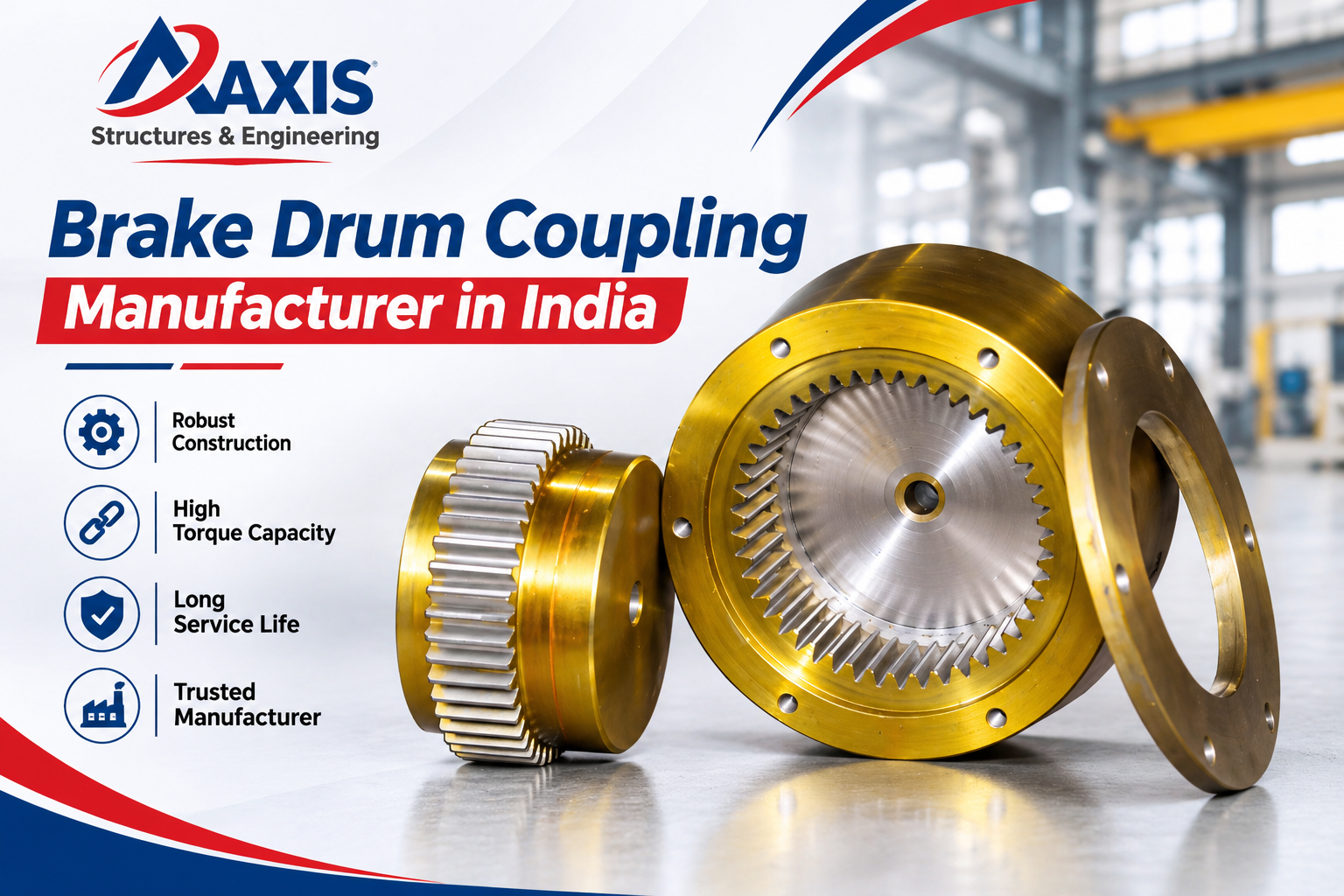
A brake drum coupling sits at an important point in an industrial drive: it transfers rotation between connected shafts and provides a drum surface for a separate mechanical brake. If the bore fits but the drum sits in the wrong position, the installation still has a problem. That is why a replacement should be selected as part of the drive and brake assembly, not by appearance alone.
If you are searching for a Brake Drum Coupling Manufacturer in India, Axis Cranes lists brake drum couplings in its crane components range. This guide covers the questions buyers and maintenance teams should settle before requesting a coupling for an EOT crane, electric hoist, winch or compatible industrial drive.
What Is a Brake Drum Coupling and How Does It Work?
In a crane drive, a brake drum coupling typically connects the motor shaft to a gearbox input shaft, or links another pair of shafts according to the machine design. Its coupling portion carries torque. The machined circular drum provides a friction surface for compatible brake shoes.
When the brake applies, the shoes grip the drum and oppose its rotation. When the brake releases, the assembly rotates with the driveline. The actual holding or stopping capability depends on the complete brake system, not just the coupling. A brake drum coupling is also different from the rope-drum coupling that connects a hoist gearbox to the rope-winding drum.
Key parts and functions to understand
- Coupling hubs: connect to the specified shafts through the approved bore, keyway or other shaft connection.
- Torque-transmitting elements: gear teeth, pins and bushes, or another design-specific connection carry rotational load.
- Brake drum surface: offers the running face contacted by compatible brake shoes.
- Flanges and fasteners: keep the assembly connected as required by the selected coupling arrangement.
- Fit and alignment: affect vibration, wear and the position of the drum relative to the brake.
Types of Brake Drum Couplings and Construction Options
Not every brake drum coupling is the same. Different designs may provide different torque capacity, shock-load behaviour, allowed shaft movement and maintenance requirements. Confirm the actual configuration offered for your equipment rather than assuming that every type is interchangeable.
1. Geared brake drum coupling
A geared brake drum coupling uses meshing gear elements to transmit torque. Depending on the design, it may allow limited angular, parallel or axial displacement. Check tooth condition, lubrication method where specified, sealing and alignment limits. The gear arrangement does not make excessive misalignment acceptable.
2. Pin bush brake drum coupling
A pin bush brake drum coupling uses pins and resilient bushes to transfer torque between coupling halves. The bushes can help cushion some torsional disturbance, but their material and condition matter. Check pin spacing, bush dimensions and whether replacement parts suit the exact coupling model.
3. Other flexible-element arrangements
Some industrial designs integrate a brake drum with a tyre-type or other elastomeric shaft coupling. Their flexibility, temperature capability and service limits depend on the selected design. These are general industry options, not a claim that Axis Cranes supplies every configuration.
4. Brake drum coupling versus a separate brake drum
A separate brake drum provides a friction surface and attaches to the driveline through its own hub or connection. An integrated coupling-and-drum assembly performs the shaft-joining function as well. Replacing one arrangement with another can change axial dimensions and the brake location, so any conversion needs engineering approval.
Where Are Brake Drum Couplings Used?
A brake drum coupling is relevant where the drive requires both a shaft connection and a compatible external drum-type brake. The exact location and duty must follow the machinery drawing and brake design.
- EOT overhead cranes: appropriate hoist or travelling drive arrangements using shoe-type drum brakes.
- Gantry and goliath cranes: selected hoisting and travel mechanisms with shaft-mounted braking.
- Electric wire rope hoists: designated motor-to-gearbox drive assemblies.
- Industrial winches: suitable winding drives requiring controlled braking or holding.
- Material-handling machinery: drive connections where a drum brake is part of the engineered system.
- Plant maintenance: replacement of an existing coupling-and-drum assembly when wear or damage is found.
How to Select the Right Brake Drum Coupling
Begin with the equipment drawing, motor and gearbox details, existing coupling model, and brake nameplate. If the original reference is missing, measure the installed assembly carefully and record where the drum sits in relation to the brake shoes.
Check transmitted torque and duty
Confirm motor power, shaft speed, gearbox arrangement and the torque transmitted through the coupling. Starts, stops, reversals and shock loading matter on crane drives. Use the coupling manufacturer's rated torque and specified service factors; do not select a coupling from drum diameter alone.
Match brake drum diameter, width and position
The drum outer diameter and usable face width must suit the existing brake shoes. Measure the axial location of the drum relative to both hubs and the brake frame. A correctly sized drum can still be unsuitable if its braking face is shifted sideways.
Confirm both shaft bores and keyways
Provide each shaft diameter, keyway width and depth, hub engagement length and any shoulder or retaining arrangement. Specify whether you require a pilot bore or finished bore. Never assume the motor-side and gearbox-side bores are identical.
Review alignment, speed and environment
Record rotational speed, permitted misalignment and available installation space. Dust, heat, moisture and repeated reversing can change maintenance needs. Flexible couplings still require proper alignment and sound bearings; they are not a workaround for a badly mounted drive.
Brake Drum Coupling Specifications to Confirm Before Ordering
This is a buyer enquiry checklist, not an Axis Cranes dimensional catalogue or promised specification range. Values, materials and tolerances must be confirmed for the actual part and service duty.
- Crane, hoist or machine type, plus existing coupling make, model and part number.
- Coupling construction: geared, pin bush or another verified arrangement.
- Required brake drum outside diameter and usable braking-face width.
- Motor-side and gearbox-side shaft diameters and finished or pilot bore requirements.
- Keyway dimensions, fit, hub lengths and shaft retaining method.
- Overall coupling length, hub spacing, bolt circle and flange details where relevant.
- Rated operating speed, transmitted torque, reversal frequency and shock-loading duty.
- Brake model, shoe width, required drum position and surface requirements.
- Preferred or approved material and any necessary heat treatment or balance criteria.
- Site conditions, maintenance access and lubrication needs for the chosen design.
- Existing drawings, photographs with a scale, samples, quantity and required documentation.
Materials and standards note: Brake drum couplings may be made from specified steel or cast materials depending on their design, but no universal grade is suitable for every installation. Crane system standards such as IS 3177 may be relevant to the overall equipment project; this does not establish certification of an individual coupling. Ask for the applicable part drawing, material specification and project-specific acceptance requirements.
Buyer Tips and Common Brake Drum Coupling Mistakes
Buyer tip: photograph both ends before removal
Get a clear picture of the motor side, gearbox side, drum face and brake shoe position. Add a ruler and photographs of any stamping. Workshops often receive only one front-facing photograph, which hides the hub lengths and bore details.
Buyer tip: record the distance between shaft ends
That distance, along with the available axial space, can matter when matching a replacement coupling. Record it before dismantling. It is inconvenient to discover the missing dimension after the machine has been stripped.
Buyer tip: inspect the brake shoes and mating surface
Look for scoring, oil contamination, uneven contact and unusual heat marks on the drum. A fresh coupling will not fix a faulty brake adjustment or damaged shoe lining. The brake should be checked as an assembly.
Common mistake: specifying only the drum diameter
Two couplings may share a nominal drum size while having different bores, hub lengths, load ratings, flange dimensions or bush arrangements. Drum diameter identifies only part of the requirement.
Common mistake: assuming a flexible coupling needs no alignment
Flexible does not mean unlimited movement. Excessive offset or angular error can damage bushes or teeth, increase vibration and shorten bearing life. Check the model's allowable limits before running the drive.
Common mistake: neglecting service and braking checks
After installation, a qualified technician should confirm fastener security, brake shoe contact, release clearances, coupling alignment and function under the OEM procedure. Safety-critical crane brakes must not be tested by guesswork.
Industries That Use Brake Drum Couplings
These components can be relevant where compatible crane, hoist or industrial drives operate, including:
- Engineering and heavy fabrication workshops
- Steel handling and metal-processing plants
- Automotive and general manufacturing facilities
- Warehouses with overhead material-handling systems
- Power, cement and process-industry maintenance operations
- Infrastructure and equipment fabrication yards
Brake Drum Coupling Manufacturer in India — Axis Cranes
Axis Cranes presents its Brake Drum Coupling within its crane components and spares range. The company describes a coupling that combines torque transmission with an integrated machined braking surface. For a meaningful enquiry, the useful details are the mating shafts, the brake and the working duty, not an unsupported claim about universal performance.
- Identify your crane or hoist model and current drive arrangement.
- Send both shaft sizes, keyway requirements and existing coupling details.
- Specify brake drum diameter, braking-face width and its axial position.
- Provide power, speed, torque or duty information where available.
- Share a drawing or labelled photos and ask which configuration fits your equipment.
If the old model number has disappeared, mention that directly. A simple dimensioned sketch showing the two bores, hub lengths and brake-drum location is often more useful than a guessed catalogue code. Contact Axis Cranes with your requirement to discuss the appropriate part and quotation.
Frequently Asked Questions — Short Buyer Answers
What is a brake drum coupling and what does it do?
A brake drum coupling joins two rotating shafts to transmit torque and includes a cylindrical drum surface for a compatible shoe-type brake. It combines a power-transmission connection with a surface on which the separate brake assembly can act.
How is a brake drum coupling different from a plain brake drum?
A brake drum coupling integrates a shaft-coupling arrangement with the braking surface. A plain brake drum provides a braking surface but may need a separate hub or drive connection. Neither item is the brake actuator or brake shoes.
Where are brake drum couplings used on cranes and hoists?
They are used in suitable motor-to-gearbox or drive-shaft connections on EOT cranes, hoists, winches and other material-handling machinery where a drum-type brake is fitted. The exact position depends on the equipment design.
What is the difference between geared and pin bush brake drum couplings?
A geared type uses mating gear teeth in its coupling arrangement; a pin bush type uses pins and resilient bushes. Both can provide a brake drum surface, but torque capacity, permissible misalignment, maintenance and replacement parts depend on the selected design.
Which dimensions are needed to order a brake drum coupling?
Provide the brake drum diameter and face width, both shaft diameters, finished bore and keyway requirements, hub and flange dimensions, available axial space and any existing coupling model or drawing.
Can a brake drum coupling correct shaft misalignment?
Some flexible geared, pin bush or elastomeric designs can accommodate limited misalignment within their specified limits. They cannot correct badly aligned shafts, damaged bearings or a distorted mounting. Follow the coupling manufacturer's alignment requirements.
How are torque capacity and brake compatibility checked?
Selection must account for transmitted torque, speed, starting or shock loads, duty cycle and the coupling manufacturer's service factors. Separately confirm that drum diameter, width and surface suit the specified brake shoes and braking duty.
What should I send Axis Cranes for a brake drum coupling quotation?
Send the equipment and brake model, coupling type if known, shaft sizes, bore and keyway details, drum diameter and width, torque or motor and gearbox details, speed, quantity, plus photos or a dimensioned drawing.
Need a Brake Drum Coupling for Your Crane or Hoist?
Share your shaft sizes, bore and keyway details, brake drum diameter and width, coupling type, duty and a drawing or photographs. Axis Cranes can review your enquiry against the required arrangement.
Send an Enquiry WhatsApp Us


